 Sober Strong
Zero alcohol
Not "less." Not "just wine." Not "just on weekends." Zero. The whole point is to let your brain reset. One drink resets the clock. Non-alcoholic beer counts. Kombucha that's over 0.5% counts.
The free guide I wish someone handed me
Day-by-day early sobriety tips. What's happening in your body during your 30 days no alcohol. What to eat. What to avoid. What to do at 5pm when your brain is screaming for a drink. The exact thing I used to make it through my first month sober.
By Meghan Melin · 900+ days sober
You don't have to hit rock bottom. You just have to start tonight.
Start day one tonight ↗Free. 47 pages. No credit card, no spam.
What's inside this calendar
A note from me to you
If you are holding this, something inside you already knows. You don't need the doctor. You don't need the DUI. You don't need to wake up in a hospital bed for it to count. You already know.
I drank for 21 years. I started at 15 at a graduation party with six shots and a fight breaking out. I drank through college, through getting sent home from work hung over, through a wedding I barely remember, through hiding vodka in places I am embarrassed to type. I drank through being a mom. I drank through my husband begging me to stop. I drank until I couldn't recognize the woman in the photos.
And here is the part nobody tells you. I was not the woman on the curb. I was the woman in the leggings and the mascara at school pickup. I was the personal trainer who could count her macros but could not put down a bottle. I looked fine. I was not fine.
On July 10, 2023, I quit. I did not plan to. I had a watermelon margarita lined up for day 76 of a challenge I was doing. Around day 45, I poured every bottle in the house down the drain and I have not had a drink since. That was 900-something days ago.
I built this calendar because the first 30 days almost broke me. I had to figure out how to quit drinking on my own — no rehab, no AA, no doctor in my corner. I did not know what was happening in my body. I did not know why I felt like a rage monster. I did not know why 5pm hit like a freight train. You do not have to figure it out alone.
This is not a workbook full of fluff. This is the playbook. Every day, every tool, every script, every supplement, every reason your brain is going to lie to you in the next 30 days. Free. No catch. If you make it to day 30 using this, that is the only thank-you I want.
If I can do it, you can do it.
— Meghan
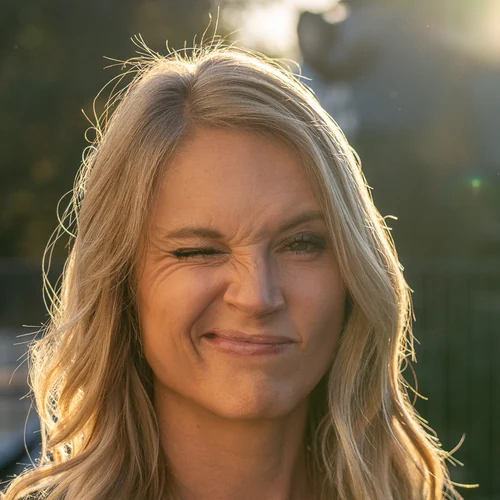
About Meghan
Meghan Melin drank for 21 years and got sober on July 10, 2023. She's a sobriety coach — not a doctor — and helps high-functioning people quit drinking without rehab, rock bottom, or AA. Her YouTube channel has 19.4K subscribers and her work has reached hundreds of thousands of people working their first 30 days.
Drop your info. The 30 days unlock right here on this page. No spam. Unsubscribe anytime.
Before you start
There are no rules here, but there are four non-negotiables. If you do these four things every single day for the next 30, your brain and body will do the rest. I am not making this up. This is the bare-minimum operating system.
Motivation is a match. Regulation is a furnace. Motivation got you to download this. Regulation is what's going to keep you sober.
— Meghan
Not "less." Not "just wine." Not "just on weekends." Zero. The whole point is to let your brain reset. One drink resets the clock. Non-alcoholic beer counts. Kombucha that's over 0.5% counts.
Your body is dehydrated in ways you can't feel yet. Water flushes the chemical sludge out. Cravings are sometimes just thirst wearing a costume. Drink the gallon.
30 minutes minimum. A walk counts. Yoga counts. The treadmill counts. You are not training for the Olympics. You are signaling to your brain that you are still here and you are not giving up on yourself.
Of a real book — not a screen. Self-help, fiction, anything. Audiobook counts: 10 minutes of listening is the same idea. This rewires the part of your brain that has been eating dopamine like candy. Boredom is the doorway to healing. Walk through it.
Information is not transformation. Reading this isn't the work. Doing it is.
The map
What happens when you stop drinking for 30 days.
Sobriety has four phases over the first 90 days. This calendar covers Phase 1: Interruption — the first 30. It is the loudest, messiest, and most decisive phase. If you get through it, the math from there gets better, not worse.
Inside Phase 1, your brain and body don't reset on a flat line. They reset in four stages. Each one feels different. Each one has its own trap. Know what's coming and you stop being afraid of it.
Your body is detoxing the chemical it has come to expect for years. Sleep is garbage. Cravings come in waves. You might feel sweaty, anxious, or weirdly hungry for sugar. Your job here is to survive — not to be a hero. Hydrate. Eat. Get through it.
The physical stuff fades. The mental stuff arrives. Everything feels flat. Food tastes muted, jokes don't hit the same. This is not forever. Your brain is regrowing the receptors you burned down. The boredom is the doorway.
Every feeling you have been numbing for years finally shows up at the door. Grief, anger, shame, sadness. Things you forgot you were carrying. You will cry over commercials. You might rage over nothing. This is not regression. This is the fog clearing.
You start sleeping. Your skin changes. You wake up clear. People notice. The bank account looks different. The pink cloud also shows up here, whispering "maybe I can have just one." The answer is no. We talk about why.
Day zero — do this before day 1
A cage is what I call any external structure that takes choice off the table when your brain can't be trusted to make it. 75 Hard was my cage. This calendar is one. Your environment is the most important one. Willpower is not going to save you. Your environment is. Before you go to bed tonight, do this. Yes, all of it. You cannot fight a war from a battlefield stocked with the enemy's ammunition.
I know throwing out a $40 bottle of wine feels like throwing out money. Here is what you're really throwing out — the next blackout, the next morning of shame, the next $200 dinner you don't remember. That bottle is the cheapest thing in the house. It is the most expensive thing in your life.
— Meghan
The daily killer
Between 4pm and 7pm is where most people relapse. I call it the witching hour, and sometimes the wishing hour — because what you're actually craving isn't alcohol. You're wishing your life looked different. Wishing it was quieter. Wishing somebody else would take over for an hour. That is not a willpower problem. That is a routine problem. Here is the routine.
You aren't craving alcohol. You are craving state change. You are wishing your life looked different. Once you understand that, you can change your state without poisoning your body. That is the whole secret.
— Meghan
PHASE 1: INTERRUPTION · DAYS 1–5
STAGE 01 OF 04
Your body is detoxing the chemical it has come to expect for years. You're going to feel weird. You're not weak — you're rewiring. Your only job this week is to stay.
This week's non-negotiables
Today, you are not trying to get sober forever. You are just not drinking today. That is the whole job. Don't look at day 30. Look at this hour. That's it.
Your body has been operating with alcohol in the system for so long that it has rewired itself around it. Today, it is realizing the chemical is not coming. Your heart rate may be elevated. You may feel jittery, anxious, or weirdly wired. Your stomach might be in knots. This is not weakness. This is biology. You cannot fight biology with willpower — but you can outsmart it with logistics. That is the whole job today.
Promise yourself you won't drink for 24 hours. Not 30 days. 24 hours. Set an alarm for this time tomorrow. If at hour 24 you still want to drink, you can revisit it then. You won't. But the brain accepts a 24-hour deal way easier than a forever deal. Forever feels like a prison. 24 hours feels like an experiment.
Write down the exact reason you are doing this. Not the polite version. The ugly one. Whose face do you see when you imagine still drinking a year from now?
Day two is when you start asking if anyone even noticed. Nobody noticed. That is also kind of the point. You are not doing this for them. You are doing this for the person who has to live inside your body.
Your blood sugar is on a rollercoaster. Alcohol is essentially liquid sugar, and your body is now panicking that it's gone. Your brain is asking for wine but it is actually asking for glucose. This is why you might feel ravenous, especially for sweet stuff. Eat. Don't try to diet right now. If a chocolate bar keeps you from drinking a bottle of wine, that is a win.
L-Glutamine stabilizes blood sugar fast. Take 500mg with a piece of cheese or jerky when a craving hits. The combo kills the sugar spike that is dressed up as a craving. Within ten minutes you'll feel different. This is the closest thing to a cheat code in the first week.
List five things you ate today. Be honest. Now look at the list. Were you actually nourishing yourself, or were you running on fumes and pretending it was discipline?
Day three is when I lost my mind. I was a rage monster. I snapped at my kids for breathing too loud. If that is you today, you are not broken — you are detoxing. Apologize where you need to. Then keep going.
Right around now, you might wake up at 3 AM with your heart pounding. That isn't anxiety, exactly. That is your body finally getting the cortisol spike it has been blocking with alcohol for years. Alcohol is a chemical loan shark — it lends you 20 minutes of calm and charges you 48 hours of interest. Today, you are paying back interest. It will not last forever.
My husband Johnathan is an Army vet with two deployments. He knew this 3 AM feeling before he ever drank — woke up with the same heart-pounding cortisol after night missions. He didn't drink to relax. He drank to be 'more lively' at parties. Then he tried to maintain a level of drunkenness where he could still react. Same drug. Different reason. Same trap.
Take 400mg of magnesium glycinate one hour before bed. Not citrate, not oxide — glycinate. This is the form that crosses into your brain and tells your nervous system the day is over. It will not knock you out like alcohol did. But it will let your body sleep instead of pass out. There is a difference, and you are about to learn it.
Who did you snap at today, or feel like snapping at? Write their name. Now write down what you wish you could've said calmly. You don't have to send it. You just have to see it.
Day four nobody talks about because day five is where everyone starts feeling like a hero. Day four is the in-between. The boredom is loud. The pride hasn't kicked in yet. Just stay. Just stay one more day.
If everything feels flat right now — TV is boring, food tastes less interesting, conversations feel slow — that is your brain. Alcohol artificially inflated every experience for years. You felt more, laughed more, cried more because the dopamine was on tap. Now the tap is off. Your real baseline is showing up. It is going to feel boring for a minute. That is not the problem. That is the reset.
When the flatness hits, do not numb it with food or scrolling. Put your shoes on and walk. 20 minutes minimum, no podcast, no phone, no music if you can stand it. Just walk and let your brain be bored. Discomfort with silence is a withdrawal symptom. The walk is the medicine. Do it daily until the silence stops feeling like a punishment.
What did you used to do for fun before alcohol became your hobby? Write three things. They probably feel stupid to write down. Write them anyway.
Five days. Five days. Most people in your life have spent more time deciding what to watch on Netflix than you've spent doing this. You are not the same person you were on Monday. Stop and feel that for one second.
Your liver has been quietly cleaning house for five days. Inflammation is down. Your skin is going to start looking different in about a week. Your gut is finally absorbing nutrients again instead of fighting a chemical fire. You have not noticed yet because the mirror lies on a short timeline. Take a photo today. A real one, no filter. Tag it day five. You will want it later.
Take a clear, no-filter photo of your face today. Side angle and front. Save it somewhere private and label it day 5. You are going to take another one on day 30. The shift will gut you. This is the proof your body has been waiting to give you. Feelings lie, but the camera doesn't.
What is one thing your body did today that it could not have done five days ago? It can be small. Walked without a hangover. Slept four hours without sweating. Honor it.
PHASE 1: INTERRUPTION · DAYS 6–14
STAGE 02 OF 04
The physical stuff fades. The mental stuff arrives. Everything feels flat. Your brain is regrowing the receptors you burned down. The boredom is the doorway.
This week's non-negotiables
Stage two. The shaky physical stuff is behind you and now the mental stuff arrives. This is the part where you start asking if life is supposed to feel this flat. The answer is no, but you have to wait it out. Your brain is rebuilding.
For years, alcohol flooded your brain with so much artificial dopamine that your receptors actually shrank to protect themselves. Now that the flood is gone, you are running on receptors that have not had to do their real job in a long time. Things that should feel good — a hug, a sunset, a great meal — feel muted. This is not your real life. This is the construction zone. Your real life is on the other side of week four.
Three times today, pause and name one thing from each of your five senses. What can you see, hear, smell, taste, touch right now. This sounds stupid. It is not stupid. It forces your brain to make new associations between presence and pleasure without alcohol. It rebuilds the wiring you burned down.
Name something small that gave you a flicker of feeling today. Not joy. Just a flicker. A song, a smell, a kid's laugh. Write it down. You are training yourself to notice again.
One week. ONE WEEK. The version of you who would have laughed at the idea of going a week sober — she's been quiet, hasn't she? You silenced her. Without a drink. Imagine what week four will look like.
Alcohol does not put you to sleep. It puts you under. There's a difference. For years you have not had real REM sleep, which is when your brain processes emotion and forms memory. You are about to start getting it back, and at first it might feel weird. Vivid dreams. Wakeups at strange times. This is your brain finally being allowed to do its actual job. Two to three weeks of weirdness and then real sleep, the kind you forgot existed.
Build a 30-minute wind-down protocol. No screens, dim lights, magnesium, cool room (65 degrees if you can), maybe a chapter of a real book. This replaces the wine that used to knock you out. It feels stupidly slow at first. Stick with it for ten days and your body will start producing actual melatonin again — the thing alcohol has been blocking for years.
What did you dream about last night? Even a fragment. Write it. Your brain is talking to you in a language it could not use when you were drinking. Start listening.
Day eight. Nobody is throwing a party. That is fine. The people whose opinions actually matter on this — the kids, the partner, the woman in the mirror — they're watching. They see you. You are being seen.
If you have a social thing this week and the idea of going sober makes you want to vomit, here is what is happening. For most of your adult life, alcohol has been the social lubricant. You learned to be 'on' with three drinks in you. Your brain is convinced that's the real you. It isn't. It is the chemically-assisted version. Sober you is the real one. You just need reps.
Johnathan can't do crowded drunk events at all anymore — his PTSD spikes around drunk people. He used to drink to manage it. Now he just leaves. Knowing your exit is not weakness. It's the new strategy.
Never stand empty-handed at a social event. People only ask 'can I get you a drink' if your hands are empty. Walk in with a club soda and lime. Get a refill before yours is empty. Have a one-liner ready — 'I'm taking a break,' 'I'm driving,' 'It's messing with my sleep.' You do not owe anyone your trauma. A prop drink and a sentence are the whole strategy.
What event are you dreading? Write it down. Now write the exit time you are giving yourself in advance. You are allowed to leave at 9 PM. You are allowed to leave at 8 PM. Nothing good happens after 10 PM anyway.
Day nine, and I want to say the hard thing. Some of your friends are not going to make this transition with you. Some of them are going to get weird. That is not your fault. You held up a mirror and they did not like what they saw.
Here is the part that hurt me — I realized I wasn't losing friends. I was losing drinking buddies. There is a big difference and you will start to feel it this week. The ones who text 'so proud of you' are real. The ones who go quiet, get sarcastic, or invite you to things specifically designed around drinking — those were not friends. They were co-defendants. Let them go. The right people are coming.
Make two lists. List one: people who supported you this week. List two: people who made it harder, even subtly. You don't have to cancel list two. You just have to stop showing up to the parties they're hosting. Distance is a quiet form of self-respect. Let your behavior do the talking, not a confrontation. The right people stay. The rest fade. That is information, not a tragedy.
Write down one person you suspect is going to struggle with you not drinking. What do you think they're actually afraid of? (Hint: It is rarely about you.)
Double digits, baby. Ten days. Most people in your life don't make ten-day commitments to anything. You just did it for the most important thing — your own life. Do not skip past that.
Open your bank statements from the last 90 days. Total up every dollar spent on alcohol, on dinners where the bill was 60% drinks, on hangover takeout, on the camping trip that was secretly $200 in booze. I did this once. It made me physically sick. I had been pissing away thousands of dollars a year on poison while telling my daughter we couldn't afford things. The number you find will not be small. It will be a weapon you can use against your old self.
Calculate what you spent in a typical drinking week. Every Sunday from now on, transfer that exact amount into a separate savings account. Watch it climb. I saved $36,000 in my first 2.5 years. That is not a typo. Alcohol is the worst investment you will ever make. This jar is the proof. By day 30 you will have real money sitting there that used to be peed out the next morning.
Write down the dollar amount you've spent on alcohol in the last 12 months. Be honest. Don't round down. Now write what you could have bought instead.
Day 11. The novelty is wearing off and the work is showing up. This is when most people quietly give up. Not in a dramatic way. In a 'just this one time' way. Don't. Not today. We are too far in.
Your brain is going to start running an experiment around now. It will whisper: 'Maybe I overreacted. Maybe I wasn't that bad. Maybe one glass of wine on a Friday is fine.' This is not the voice of reason. This is the voice of addiction wearing the costume of reason. The concept of one drink is a fairy tale. One drink isn't a classy glass of wine. It is the starter pistol for a spiral. You already know how this story ends. You wrote it 500 times.
Here is the rule that ends the moderation conversation forever — you cannot reverse a brined cucumber. Once a cucumber has been in the brine long enough, it is a pickle. There is no putting it back. There is no 'just being a cucumber on Fridays.' For those of us who have been pickled by 21 years of drinking, moderation is not on the table. That is not a punishment. That is biology. The freedom is in accepting it instead of fighting it.
When was the last time you actually had 'just one drink' and it stayed at one? Be honest. Now you have your answer.
Day 12 and I want to talk about your body for a second. It hasn't been allowed to do its real job in years. It is doing it now. Be a little nicer to it today. It has been through a lot because of decisions you made.
Around now, your body's inflammation markers start visibly dropping. Puffiness in your face, especially around your eyes, will start fading. The redness in your skin that you assumed was 'just how I look' was inflammation from alcohol. My blood pressure went from 140 over 90 when I was drinking to 107 over 70 sober. That is not a small change. Watch your jawline this week. Watch your eyes. Your real face is coming back. The version of you that you forgot existed.
Alcohol dehydrated every cell in your body. Plain water won't fully fix it — you also need electrolytes. Add a pinch of pink salt and a squeeze of lemon to one of your daily liters. Or use an unsweetened electrolyte packet. Your skin, your headaches, your energy — all three are about 30% hydration. Most people are walking around half-empty and don't know it.
What does your face look like in the mirror today versus last week? Don't be polite. Just notice. Write one thing that has changed.
Day 13. Halfway to halfway. The hardest part of the second week is showing up when there's no medal for it. Show up anyway. The medal is being alive at 60. The medal is your kid not telling their therapist about you someday.
Somewhere around now, a wave of sadness might hit that does not seem connected to anything. You are not regressing. You are grieving. You are grieving years of your life you don't remember. Photos you can't believe were you. Birthdays you missed even though you were physically there. This grief is the cost of waking up. You have to feel it to release it. Don't drink over it. Cry over it. Cry hard. Cry ugly. The tears are the alcohol leaving you on a cellular level.
Set up an empty chair. Sit across from it. Imagine your drinking self is in it. Say what you need to say to her. Out loud. The anger, the grief, the part where you tell her you forgive her. It feels ridiculous for about 90 seconds, then it cracks something open you did not know was sealed. Do this once this week. Do not skip it because it feels weird.
What memory are you most ashamed of? Don't write the whole thing — just one word that brings it up. Now write 'I forgive myself' next to it. Read it back ten times.
Two weeks. TWO WEEKS. If somebody told you 14 days ago you'd be here, would you have believed them? Probably not. So let that be the data — your fear about the future is not reliable. Your action is.
Days 12 through 16 are a known plateau in early sobriety. The big initial wins have happened, the dramatic transformation is still a week away, and you are in the boring middle. This is where the brain says 'maybe this isn't doing anything anymore.' It is doing everything. The work happening below the surface right now is the most important work of the whole month. Stay in the plateau. Trust the math.
Every night for the rest of the month, write three sober wins from that day. Tiny ones count. 'Drank water at 3 PM.' 'Said no to wine at dinner.' 'Took a walk instead of opening the fridge.' Your brain is wired to scan for what's missing. This forces it to scan for what's working. Do it for 16 nights and your default brain pattern starts to shift.
What is one thing you can do this weekend that you could not have done two weeks ago? Make it specific. Then go do it.
PHASE 1: INTERRUPTION · DAYS 15–21
STAGE 03 OF 04
Every feeling you've been numbing for years finally shows up at the door. Grief, rage, sadness, shame. You will cry over commercials. This is not regression — this is the fog clearing.
This week's non-negotiables
Day 15. Halfway. You are not the person who started this. You're a different person now and the next 15 days are going to keep changing you. Don't be scared of who you're becoming. She has been waiting a long time.
Stage three is where the emotions you have been numbing for years start showing up at the door, one at a time, often without warning. Grief about your mom. Anger at your ex. Fear about your kids. Things you thought you had dealt with and clearly hadn't. This is not relapse territory unless you make it one. This is the rewire. Your brain is finally safe enough to process what you have been freezing. Let it.
Neuroscientist Jill Bolte Taylor's research shows an emotion's chemical signal lasts in your body for 90 seconds. After that, you are choosing to keep it going by replaying the thought. When a wave hits — anger, sadness, panic — set a timer for 90 seconds. Feel it. Let it move. When the timer ends, the worst of it is gone. The wave passes. The shore is still there.
Name an emotion you have been avoiding for a long time. Write it down. Now write one sentence about where it lives in your body — chest, throat, stomach. You are learning to be a person who feels instead of numbs.
Day 16 and somebody might be getting on your last nerve. Probably your partner. Probably for something tiny. Take a breath before you light the match. Most of week three rage isn't about them. It's about you finally being awake.
You spent years using alcohol to take the edge off everything — overstimulation, frustration, small annoyances. Now the edge is back and there is no quick blade to dull it. The result is you might find yourself snapping at people you love over the volume of their chewing. This is not your real personality. This is overstimulation without an exit ramp. Build an exit ramp that isn't a drink.
When you feel a snap coming, say out loud to whoever is there: 'I need five minutes.' Then walk. Outside if you can. The bathroom if you can't. Five minutes of solitude before you respond. This is the bridge that alcohol used to be. You can build it from concrete instead of vodka. Your relationships are going to either learn to respect this boundary or fall apart trying. Most of them will rise.
Who have you been short with this week? Without making excuses, write down what they actually did versus what your nervous system reported it as.
Day 17. Some of the best memories of my life have happened on days that started with 'I really don't want to.' Today is one of those days for somebody. Maybe it's you. Don't quit on the morning of the miracle.
One day this week you will wake up with more energy than you have had in years. The next day you will feel like a wet rag. This zigzag is not a problem. Your body is rebuilding mitochondria, your liver is processing backlog, your gut is recolonizing. It is using energy in waves to do the deep work. Don't fight the low-energy days. Honor them. Nap if you can. Productivity is not the measurement right now. Healing is.
Today, pick one thing you can take off your list without consequence. Not in a productive 'I'll do it tomorrow' way. In a 'this can wait, I am resting' way. Sobriety is not the time to become a hyper-productivity machine. The cultural script says 'now I have all this time' — and then people fill the void with grind. The void is where the healing happens. Don't fill it. Sit in it.
What's one thing you've been doing on auto-pilot that you actually hate? Write it down. Now ask: does this still need to be in your life now that you're not drinking through it?
Day 18 — the version of you that the people in your life have been bracing for is starting to disappear. They might not have said anything yet. They've noticed. Trust me. They've noticed.
If you have kids, this is the part where they start saying things that wreck you. 'It's quieter now.' 'You and daddy don't fight as much.' 'Mommy, you smell different.' These sentences come out of nowhere on a Tuesday and they will gut you. Let them gut you. Your kids are not subtle. They have been watching the whole time. They have a thousand memories you don't because you were drinking through them. Today is the start of giving them new ones.
Dads hear it too. 'Daddy doesn't yell now.' 'You're home for bedtime more.' 'You smell like coffee, not the other thing.' These sentences come out of nowhere on a Tuesday and they will gut you. Let them gut you.
Pick one hour today and put your phone in another room. Be physically present with one person you love — your kid, your partner, your friend. No multitasking. No half-listening while scrolling. One hour of full presence. This is the actual currency of the life you are building. Not the days sober. The hours where someone got the real you.
What's one specific memory you wish your kid (or partner, or friend) had of you, that you can create THIS WEEKEND? Write it. Plan it. Do it.
Day 19. Your old life is still texting you. The friends, the events, the routines. Some of them are auditions for a part you don't play anymore. You don't have to take the audition.
Ten percent of sobriety is putting down the bottle. Ninety percent is figuring out who you are now. You spent years being The Drinker — the fun one, the wild one, the one who would say yes to anything. That was a role, not an identity. Now you get to find the actual identity. It feels disorienting. It is supposed to. You are not lost. You are unpacked. There is a difference.
Write one sentence: 'I am the kind of person who ____.' Don't write the old version. Write the version you want. 'I am the kind of person who goes to bed at 10 PM.' 'I am the kind of person who handles hard things without numbing.' 'I am the kind of person who keeps my word to myself.' Read it every morning for the next 12 days. You become what you repeat.
Write three identity statements right now. Don't overthink them. They don't have to be perfect — they have to be aimed at where you're going.
Twenty days. Holy crap. Twenty days. You are in the top fraction of people who have ever tried this. Most quit by day three. You are still here.
Around the end of this week or early next, you might start feeling really, really good. Like 'wow, maybe I had this in me the whole time' good. This is called the pink cloud and it is real and it is also dangerous. Your addiction is going to disguise itself as confidence. It will whisper 'I'm fixed. I bet I could moderate now.' Your addiction is not stupid. It is a sniper. It uses your own success against you. The pink cloud is the most dangerous phase of early sobriety because 90% of relapses happen here.
Today, before the pink cloud arrives, write a letter from sober-you to future-pink-cloud-you. Tell her exactly why you quit. List the worst moments. Be specific. Be brutal. Seal it in an envelope or save it as a draft email. When the 'maybe just one' thought comes, open it. The pink cloud cannot argue with day-20-you. She is too clear.
Write three sentences to your future self for the moment she romanticizes drinking again. Start with: 'Remember when ___.' Make it ugly. Make it specific.
Three weeks. They say it takes 21 days to build a habit and that's bull, but it does take 21 days to start trusting yourself. That's bigger. A habit is forgettable. Trust is foundational.
If you have made it here, your sleep architecture is back online. You are getting actual REM sleep, probably for the first time in years. Dreams might be vivid and weird — that is your brain catching up on processing. Your morning energy should be different. Your skin should look different. Your jawline. Your eyes. The mirror is finally telling you what your body has been doing in the dark.
Today, do a body audit on paper. Sleep quality (1-10 today vs day 1). Skin. Mood baseline. Anxiety level. Cravings frequency. Energy by 3 PM. Write the numbers. You will be shocked. We don't celebrate the small wins enough — the math doesn't lie. Save these numbers. You'll look at them again on day 30.
What is one thing your body can do at 21 days that it could not do at day 1? Hold the answer. Honor it. Tell someone.
PHASE 1: INTERRUPTION · DAYS 22–30
STAGE 04 OF 04
You start sleeping. Your skin changes. People notice. The bank account looks different. The pink cloud is also here whispering 'maybe just one.' The answer is no. This is the most dangerous stage.
This week's non-negotiables
Day 22. Welcome to the part that almost feels easy. It isn't easy. It is just the part where your nervous system stops fighting you. Don't confuse that for being done. You are still under construction.
Around now, you will start meeting yourself. The actual you. The one who likes specific things, has specific opinions, laughs at specific stuff. Not the drinking-buddy you. Not the wife-mom-employee you. The you-you. It will feel like meeting a stranger you already love. This is the gift on the other side of withdrawal. Most people will never get to meet themselves this way. You are getting that gift right now.
Today, try one thing you have always been mildly curious about but never tried. Not a giant thing — a tiny one. A new tea. A class you saw on Instagram. A podcast genre. A recipe. Sobriety opens up bandwidth, and bandwidth is meant to be spent on curiosity. The version of you that was drinking didn't have any. You have all of it now. Spend some.
What did you used to be curious about when you were a kid? Name three things. They are not random. They are clues.
Day 23. Somebody is going to comment on how you look this week. Watch your reaction. The part of you that flinches at compliments — that part still thinks she's the old Megan. She isn't. Take the compliment.
Around three weeks, the inflammation drop becomes visible to other people. Your face looks different. Your eyes are clearer. Your skin tone has changed. People will say 'you look great, what are you doing?' This is awkward if you are not telling everyone you quit drinking. Have a one-liner ready. You don't owe anyone your story. But you also don't have to hide the truth like you used to hide the bottles.
Decide today how you want to answer the 'you look great' question. You have three options: tell the truth ('I quit drinking, it's wild what it does'), deflect kindly ('thanks, I've been taking better care of myself'), or pivot ('thanks! How are YOU doing?'). Any of these is fine. The point is to have it picked before the moment arrives so you don't fumble in real time.
Who in your life do you want to tell first? Why them? Is it because they will be happy for you, or because you need them to validate the change?
Day 24. The math is starting to compound. Each day sober is not 1 day. It's 1 day plus the cumulative gain of the last 23. You are building interest now. Don't withdraw the principal.
Sobriety is not linear. The first 14 days feel like climbing in molasses. The next 14 feel like the molasses turns into momentum. By day 24, you are moving without thinking about it. Your default state is changing. Your reflexes are different. The 5 PM cortisol crash is muted now because your nervous system has learned it survives without a sedative. This is what 'building a base' actually looks like.
Write a letter from one-year-sober you to today-you. What does she want you to know? What is she grateful you did? Be generous and specific. Most people never do this exercise because it feels cheesy. Do it anyway. The brain treats imagined futures almost like memories. Give yourself the memory of being a year sober — before you've technically earned it. Your nervous system needs to feel it possible.
What's one thing one-year-sober you is going to thank today-you for? Write it as if you're her, looking back.
Day 25. Five more days. I want you to know something — the moment I quit, I genuinely believed I'd only last a week. I had zero hope I'd be sitting where I'm sitting today. The reason I'm here is I just kept showing up. That's it. That's the whole secret.
By now, your relationship with food has shifted. The crazy sugar cravings of week one are easing. You are eating actual meals. You are tasting things you forgot tasted. Your stomach is happier. Your body composition might be starting to change too — when you are not drinking 1,000+ calories a week in alcohol plus the late-night hangover food, the math just works. Keep eating real food. This is not the moment to start a diet.
Build at least one meal a day as 30 grams of protein, 30 grams of fiber, 30 grams of healthy fat. Your blood sugar will love you. Your cravings will lower. Your energy will stabilize. Protein especially is what your brain needs to make the neurotransmitters that alcohol used to fake. Eggs, cheese, meat, beans, Greek yogurt. Feed yourself like someone who is rebuilding their brain. Because you are.
What is one food you used to crave constantly when you were hungover that you don't crave anymore? Notice that. Your body is talking.
Day 26. Tonight, somebody is reading this on day one. They are scared. They are alone. They are in a kitchen with the bottle still in the cabinet. You were her four weeks ago. That is who you are doing this for too — the next her.
Generational cycles are not theoretical. They are loud and they get loud through behavior, not lecture. The Megan that was drinking was teaching her kids that wine fixes a hard day. The Megan that's sober is teaching them that hard days are just hard days, and we live through them. You are doing the same thing right now. You are the end of the line for the numbing family tree. That is not dramatic. That is just biology and pattern recognition and family. Somebody had to be the one to stop it. It is you.
Write down the names of every person who is a different person because you are not drinking. Your kids by name. Your partner. Your parents. Your friends. The version of you that exists at 60 years old. Future grandchildren you haven't met. The list will be longer than you expect. Read it back when the pink cloud whispers. That list is who you are protecting.
What did your last drink cost the people on your witness list? Write one specific moment per person.
Day 27. The last few days of any challenge are the days where ego shows up wearing a 'maybe just to celebrate the win' costume. Punch it in the face. We are not celebrating with the poison we just buried.
After the 30-day mark, you might enter what's called PAWS — Post-Acute Withdrawal Syndrome. Random bursts of low mood, anxiety, or cravings that come out of nowhere weeks or even months in. This is normal. Your brain is still rebuilding well past day 30. If you understand this is coming, you do not panic when it shows up. You don't think 'I'm broken, sobriety failed.' You think 'oh, here is PAWS,' and you wait it out. Awareness is half the battle.
Johnathan's PAWS hits look different than mine. Mine is sadness for no reason. His is wanting to be alone, which scares the kids. We learned to name it — 'this is PAWS' — and let it pass without anyone catastrophizing.
Write down what you will do the first time PAWS hits you in month two or three. Who you will call. What you will do for 24 hours. Where the worst version of you will not be allowed to make decisions. Have the plan written down before you need it. The version of you who is in a PAWS dip cannot draft the plan. The clear version can.
What was your biggest emotional trigger to drink in the old life? It will be the same trigger in PAWS. Plan for it now.
Day 28. Three days out. I'm proud of you and the version of you that started this calendar would cry if she could see you now. She thought she was a lost cause. She wasn't. You're proving it.
What used to feel like crisis now feels like a Tuesday. Things that would have sent you running for a glass of wine — kid meltdown, traffic, work email — barely register now. This is not because the events got smaller. It is because you got bigger. Your nervous system has expanded its capacity. This is the actual transformation. Not the skin, not the money, not the sleep. The expanded capacity to be a person who can handle their own life.
Write down three things that would have wrecked you 30 days ago that didn't even register this week. The traffic, the in-laws, the bad night with the kids, the missed deadline. The fact that you didn't reach for a drink — and probably didn't even THINK about reaching for one — is not nothing. That is the data. Your nervous system has receipts.
What is one situation this week where the old you would have drunk over it, and the new you didn't even consider it? Notice the gap.
Day 29. Tomorrow you cross. I want to say this clearly — day 30 is not the end. Day 30 is the start. The real work is what you build on day 31, day 100, day 500. You're not finishing a sprint. You're starting Phase 2.
Nothing automatic. That's the truth. The number resets the brain's permission to coast. Be careful. Most relapses happen between day 30 and day 90 because people stop using the tools that got them here. The supplements. The walks. The 5 PM routine. The journal. Don't quit the things that worked. The structure is not training wheels you take off. It is the bicycle.
Today, commit to one specific structure for the next 60 days. Not all of it — just one. Magnesium at night. Walks at 5 PM. The journal. Pick the one tool that has helped you the most and lock it in until day 90. Then add another one. Sustainable beats heroic every single time. Heroic is how people relapse on day 32.
What is the one tool from this calendar that has saved you the most? Name it. Commit to keeping it past day 30.
Day 30. Look at you. LOOK AT YOU. I don't know what your face looks like right now, but I know what mine did at day 30 — I cried because I genuinely didn't think I could do it. You did it. Don't dismiss this. Don't minimize this. Sit in it.
You just finished Phase 1. Interruption. The loudest, messiest, most decisive phase of the whole 90-day reset. You have rewired neural pathways that took decades to build. You have changed your skin, your sleep, your liver, your gut, your relationships, your bank account, and the legacy you are leaving your family. You have proven to yourself that you are capable of keeping a promise to yourself — which is the foundation that every other promise in your life now sits on. This is not a small thing. This is the thing.
Open your day 5 progress photo. Take a new one today, same angle, same light. Open your day 21 numbers. Update them. Open your sobriety jar — what's in it? Open your phone — how many group texts are different now? Open your closet — what fits differently? Sit with the audit for one full hour. Don't rush past the proof. You earned every line of it.
Write one sentence to the version of you who started day 1. What does she need to hear from where you're standing now?
Bonus section
In the first 30 days you are going to face a handful of conversations that feel impossible. Here is what to say. Copy these directly. Modify them slightly to sound like you. The point is to have the words pre-loaded so you are not improvising in a hard moment. The more you explain, the more they push. Short, warm, leaving — that's the trifecta.
You are quitting. They aren't, at least not yet. The dynamic between you is shifting and they may be subtly threatened by it.
"I love you. I'm not asking you to do this with me. I'm just doing it for me. Some nights are going to be hard for me — I might need you to not have a drink in front of me at home, or to skip a certain event with me. I'll tell you when I need that. Nothing is changing about us. I'm just changing what's in my glass."
There's always one. The aunt, the sibling, the in-law who acts like you've joined a cult. They're not mocking your sobriety — they're flinching at the mirror you're holding up.
"I'm not telling you what to do. I'm telling you what I'm doing. You don't have to understand it. You don't have to agree with it. You just have to respect it. That's the only thing I'm asking. We can talk about anything else."
Someone at a party gets defensive five minutes after you decline a drink. This is the most common script and the easiest to defuse.
"Oh god, no. I'm definitely not better than anybody. I'm just figuring some stuff out. How's [their kid / their job / their dog]?"
Happy hour, holiday party, client dinner. You don't owe the office your sobriety story.
"I'm taking a break — it's been messing with my sleep and I want to feel sharp this quarter. I'll have a club soda. Cheers."
Bottle of wine on the table, everyone reaches for a glass, you don't.
"Not for me, thank you. I'll stick with sparkling water tonight." Then keep the conversation moving. Compliment the meal, ask them a question, redirect. People follow your energy.
The friend who has 15 years of memories of you with a drink in your hand and is genuinely confused.
"I know it's weird. I drank a lot for a long time and it was costing me more than I could afford to keep paying. I'm not trying to convert anyone. I just couldn't keep doing what I was doing. I love you and I want to keep being friends — let's go on a walk, get coffee, do dinner. Just maybe not the bar."
Age-appropriate. Honest. Brief. Don't overshare.
"I realized that drinking was making me less of the parent you deserve. So I stopped, so I can be all the way here with you. I love you, and I'm proud of myself, and I hope you're proud of me too."
Conversations with yourself
"I know exactly how bad it was. That's why I'm here. The reason it doesn't feel that bad anymore is because I'm not living in it anymore. That's evidence the quitting worked, not evidence the drinking was fine."
"A reward doesn't cost me two days. A reward doesn't end with me hating myself in the morning. I deserve an actual reward — something that makes my life better, not worse."
"Everyone else also wakes up at 3 AM hating themselves, fights with their spouse, spends thousands a year, lies to their kids, and has no memory of half their adult life. I'm not 'missing out.' I just stopped paying the bill."
"If I could moderate, I would have. I never could. The concept of one drink is a fairy tale I keep buying tickets to. The price of that ticket is the last 21 years of my life and I'm done paying it."
"I don't have to do this forever. I just have to do this today. I have done today before. I can do today again. Forever is a story I'm telling myself. Today is the only real thing."
When a wave hits
Print this section. Put it on your fridge. When the wave hits, you will not be in a state to remember what's in this calendar. You need it visible.
Before you do anything in a craving, ask: am I Hungry, Angry, Lonely, or Tired? 90% of the time it's one of these four. A drink doesn't fix any of them — it just hides them for twenty minutes.
When you romanticize a drink, you are only playing the first 20 minutes. Force yourself to see the next 3 hours: slurring, fighting, glazed eyes. Then play the next morning: puking, checking your phone, panic, shame. Then play it forward six months: you're right back here on day 1 again.
When you play the tape all the way to the hangover and the chaos, the drink loses its power.
Don't just drink tap water. Your brain feels deprived. Use a fancy glass. Sparkling water. Cherry juice splash. Lime wedge. Pomegranate. Ginger beer. Make it ritualistic. The weight of the glass in your hand signals to your brain that we are relaxing now.
The ritual matters as much as the drink itself.
At any social event, never stand empty-handed. People only ask 'can I get you a drink' if your hands are empty. Walk in with a club soda and lime. Get a refill before yours is empty. Have a one-liner ready: 'I'm taking a break,' 'I'm driving,' 'It's messing with my sleep.'
You don't owe anyone your story. A prop drink and a sentence is the whole strategy.
Pre-decide your leave time before you arrive. 9 PM. 9:30. Whatever it is, lock it in. Tell one person your leave time and have them text you at that time. You are not weak for needing this. You are strategic. Nothing good happens after 10 PM anyway.
I'd rather be home in pajamas at 9 PM than be the cautionary tale at 11 PM.
An emotion's chemical signal lasts in your body for 90 seconds. After that, you're choosing to keep it going by replaying the thought. When a wave hits — anger, sadness, panic, craving — set a timer for 90 seconds. Feel it. Let it move. When the timer ends, the worst is gone.
The wave passes. The shore is still there.
Stop saying 'I'm trying to quit.' Start saying 'I don't drink.' Trying is permission to fail. 'Don't' is closure. When someone offers, the answer is short: 'I'm good, thanks.' No explanation needed.
You become what you repeat. Repeat the right thing.
The supplement cheat sheet
This is what worked for me. Not medical advice. Talk to your doctor. But if you want to know what is in my cabinet, here it is.
Calms anxiety naturally. Recommended to me by my nurse practitioner. If you only take one thing on this list, take this. The 5 PM dread? This makes it manageable. Take 200mg in the late afternoon before the storm.
Calms the nervous system. Helps with sleep. Glycinate specifically — not citrate (laxative), not oxide (useless). 400mg one hour before bed. This is what tells your body it's safe to sleep without alcohol.
Stabilizes blood sugar. Kills sugar and alcohol cravings almost instantly. 500mg when a craving hits. The closest thing to a cheat code in the first 30 days.
The neurotransmitter alcohol used to fake. Your body is rebuilding its real GABA system. Supplementing supports the process. Use as needed for anxiety.
This is the #1 alcohol replacement. Bubbles trick the brain into thinking it's getting something special. La Croix, Bubly, Kirkland brand from Costco. Keep your fridge stocked. Always.
FAQ
Yes. No credit card, no trial, no upsell on the next page. You give me your email, the calendar opens. I send you a few emails over the next 30 days with extra support. You can unsubscribe anytime.
No. I send one email per week max during your 30 days, plus a heads-up when I post a new YouTube video. You can unsubscribe from any email with one click.
Then you're exactly who I built this for. I tried and failed for 21 years. The calendar isn't built on willpower — it's built on regulation and structure. Different mechanism, different result.
Especially for you. Most of the people I help are high-functioning. The 30-day calendar is built for the binge drinker, the mom drinking wine to take the edge off, the dad cracking beers from 5pm to bedtime, the personal trainer counting macros, the contractor, the executive — anyone who looks fine on the outside and is not fine on the inside.
Quick examples of who's in here right now:
You don't have to fit a stereotype to deserve a better life.
If you've been drinking heavily every day, yes. Alcohol withdrawal can be physically dangerous. This calendar is what worked for me — a binge drinker without physical dependency. Be smart. Get checked out if you need to.
No and no. I'm not affiliated with AA. I don't use higher-power language. I'm not against AA — it works for a lot of people. This is just a different path. Practical, structural, grounded in biology and identity work.
Rehab is $15,000–$30,000 and removes you from your life for 30 days. This is free, you stay in your life, and the tools are built to work at 5 PM in the kitchen, at 7 PM at the bar, at 11 PM in the garage — wherever your wave actually hits.
The math
You don't need to quit your life to quit drinking. You just need a playbook.
You just finished Phase 1. Next is Phase 2.
Days 31 to 60 — Phase 2: The Void — is where most relapses happen. Not because people are weak. Because they thought day 30 was the finish line. It's not. It's the starting line. The cage that held you for 30 days has to be replaced with something else. That something else is a tribe.
I built the Sober Strong community for the people who finished this calendar. Not a stadium full of cheerleaders. A ruthless little tribe of three — the people who get it, who are doing it too, who can hold you up on the hard days and call you out on the romantic ones.
Sobriety puts down the weapon. The next 60 days are where you heal the bullet hole. You should not do that alone, and you do not have to.
There are people in there right now who started day 1 because of this calendar. Come find them. Come find me. Come build day 31.
If I can do it, you can do it. — Meghan
The calendar is free. Always will be.
Email it to yourself so you have it for the night you actually need it.